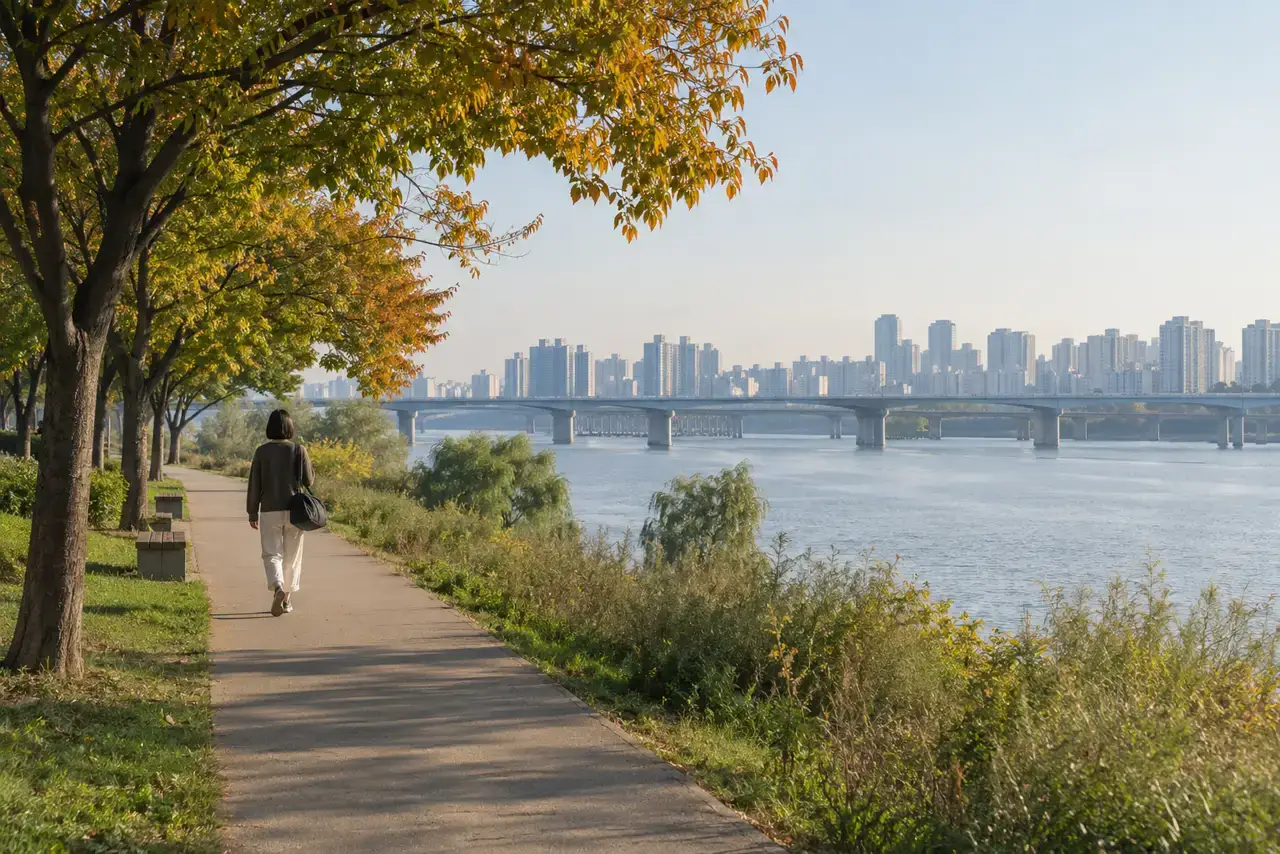
Choose Mangwon when the market, river and residential rhythm are the point of the stay; choose Hapjeong when you want that west-Seoul character with easier transfers and later evenings. The areas are close, but the useful hotel address is not interchangeable. Decide from the door-to-station route and the number of central-Seoul days still on your plan.
Count the days that start elsewhere
A slow neighborhood base works best when mornings can remain local. If most days begin around the palaces, southern Seoul or an early tour meeting point, repeated transfers may outweigh the atmosphere. Plot three actual journeys before booking. Seoul’s official guide says subway operation is roughly 05:30 to midnight and varies by station, so check the dated first or last train rather than treating that range as a guarantee.
Why Mangwon suits unhurried days
Mangwon is the stronger choice for travelers who want a market visit, small streets and Hangang time to form one low-pressure day. The city describes the river parks as places for leisure as well as recreation. That benefit depends on the exact room: confirm the walking route to both Line 6 and the river, because a neighborhood label can hide an inconvenient edge location.
When Hapjeong is the safer compromise
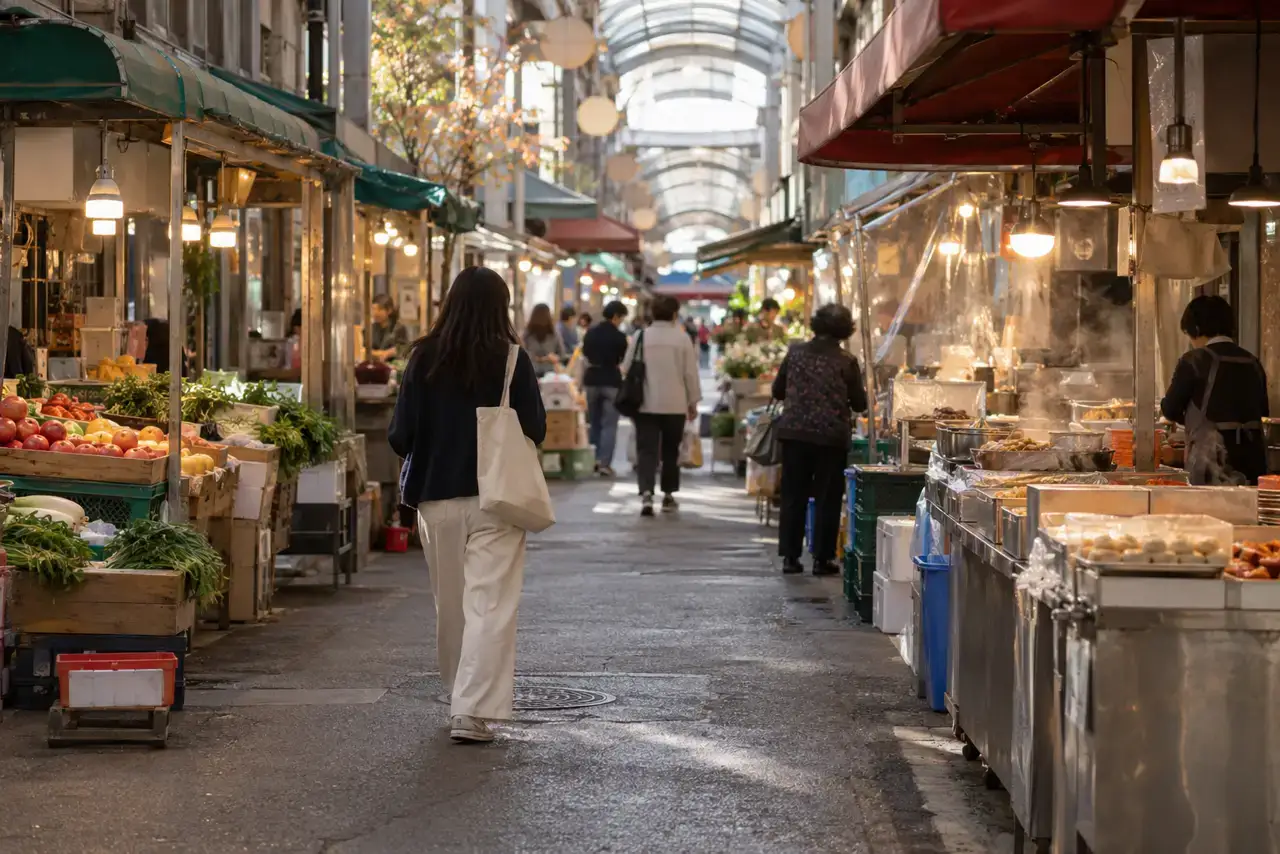
Hapjeong is better when neighborhood time must share the trip with broad city access. Lines 2 and 6 create more routing options than Mangwon’s Line 6 alone, and the busier streets support later returns. The trade-off is noise and a less residential feel near major roads. Check which exit serves the hotel and whether the pavement, crossings and lift access work with your luggage.
Luggage, design and sleep
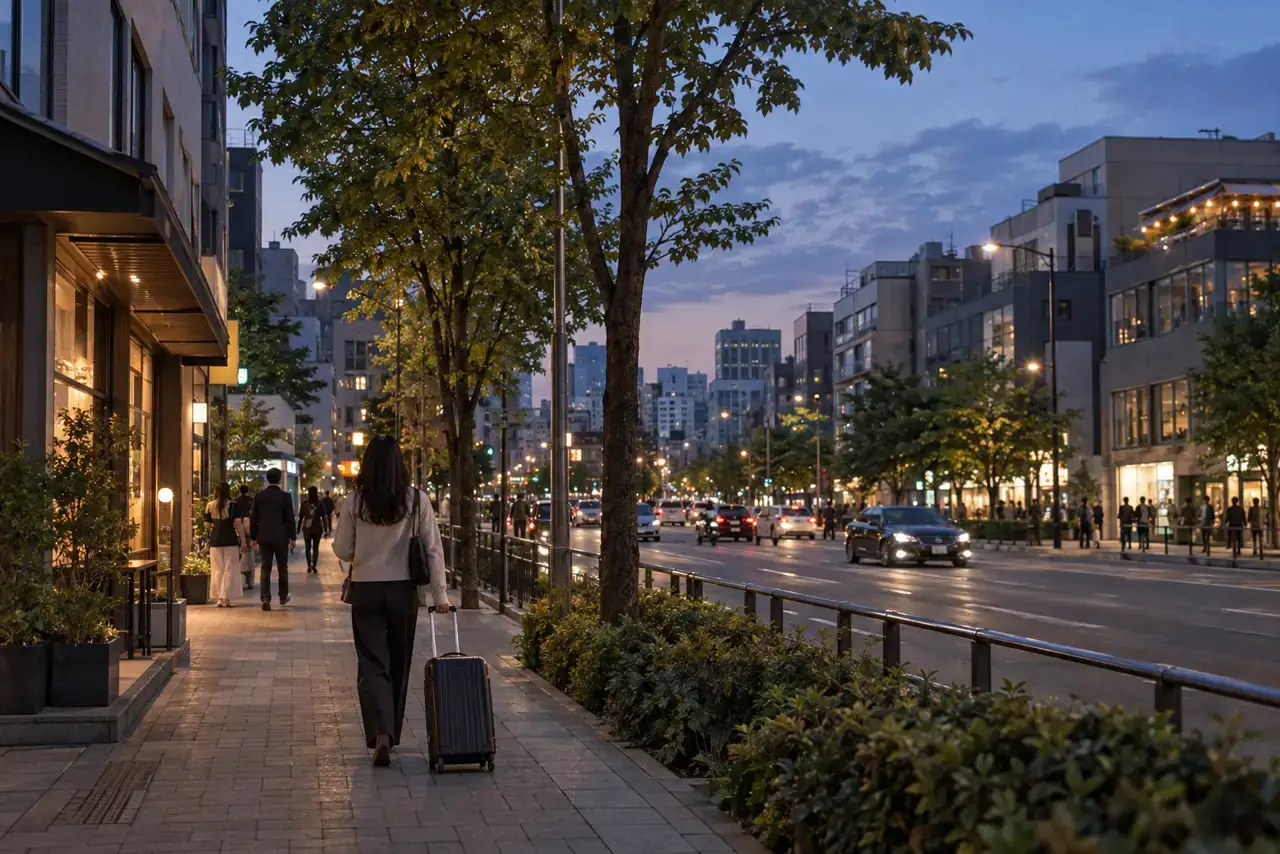
Compact independent rooms can look efficient online yet leave little floor space for two open cases. Ask for usable room dimensions, lift access and baggage storage. In Mangwon, check delivery-bike and market setup noise; in Hapjeong, check road, nightlife and rail orientation. A high floor is not automatically quiet if the window faces a broad junction.
Check before booking
- Plot three door-to-door journeys, including the last walk.
- Verify the station exit and lift route with luggage.
- Ask about room size, window direction and street noise.
- Confirm late check-in and baggage-storage hours.
- Check the route to the river, not only the area name.